
The Ultimate Safety Training Asset for Airports
We present a 3D, photorealistic digital twin of your airport — purpose-built for runway incursion training, airfield safety simulations, and a virtually unlimited range of operational scenarios.
We develop a photorealistic 3D digital twin of your airport, built once, used for continuous training development.
A photorealistic, to-scale digital twin of your airport inside a real-time 3D engine is not a one time video but a permanent, living training platform. Once the digital twin exists, runway incursions, weather scenarios, and airfield safety simulations can be generated on demand, from any angle, in any condition, with zero operational disruption.
Designed for airfield drivers, ground crew, pilots, and operations personnel who work on and around active runways every day.
CHICAGO ORD DEMO
For the busiest airport in the country, we have created a simulation.The demo demonstrates the environmental fidelity, lighting accuracy, and scenario realism of our 3D pipeline.
Your airport receives the same treatment – built to its specific airfield geometry, markings, and operational context.
The vast capabilities of a 3D Digital Twin
Full environmental control, no on-site production required.
Once your digital twin exists, the real-time 3D engine provides capabilities well beyond traditional video with zero on-site disruption for production. Below are three core capabilities that make a digital twin transformative for airfield safety training.
Dynamic Time of Day Control
Set any lighting condition – pre-dawn, dusk glare, midday, or full night operations.
The digital twin engine uses physically accurate sun position and sky simulation tied to real geographic coordinates. Every animation can be set to any hour – replicating the exact conditions of a real incident, or stress-testing driver behavior during low-visibility pre-dawn operations. Runway edge lighting, taxiway centerline lights, and guard lights all respond accurately to the simulated time of day.
Full Weather System Control
Fog, snow, rain, blowing ice – any condition that affects airfield visibility and traction.
Weather is among the most significant factors in airfield safety incidents – and the hardest to replicate in traditional training. The digital twin supports full volumetric fog, accumulating snow on surfaces, rain and wet pavement reflections, wind-driven precipitation, even cloud ceiling. Every environmental condition your ground operators might face can be set precisely, combined, and reproduced with cinematic detail.
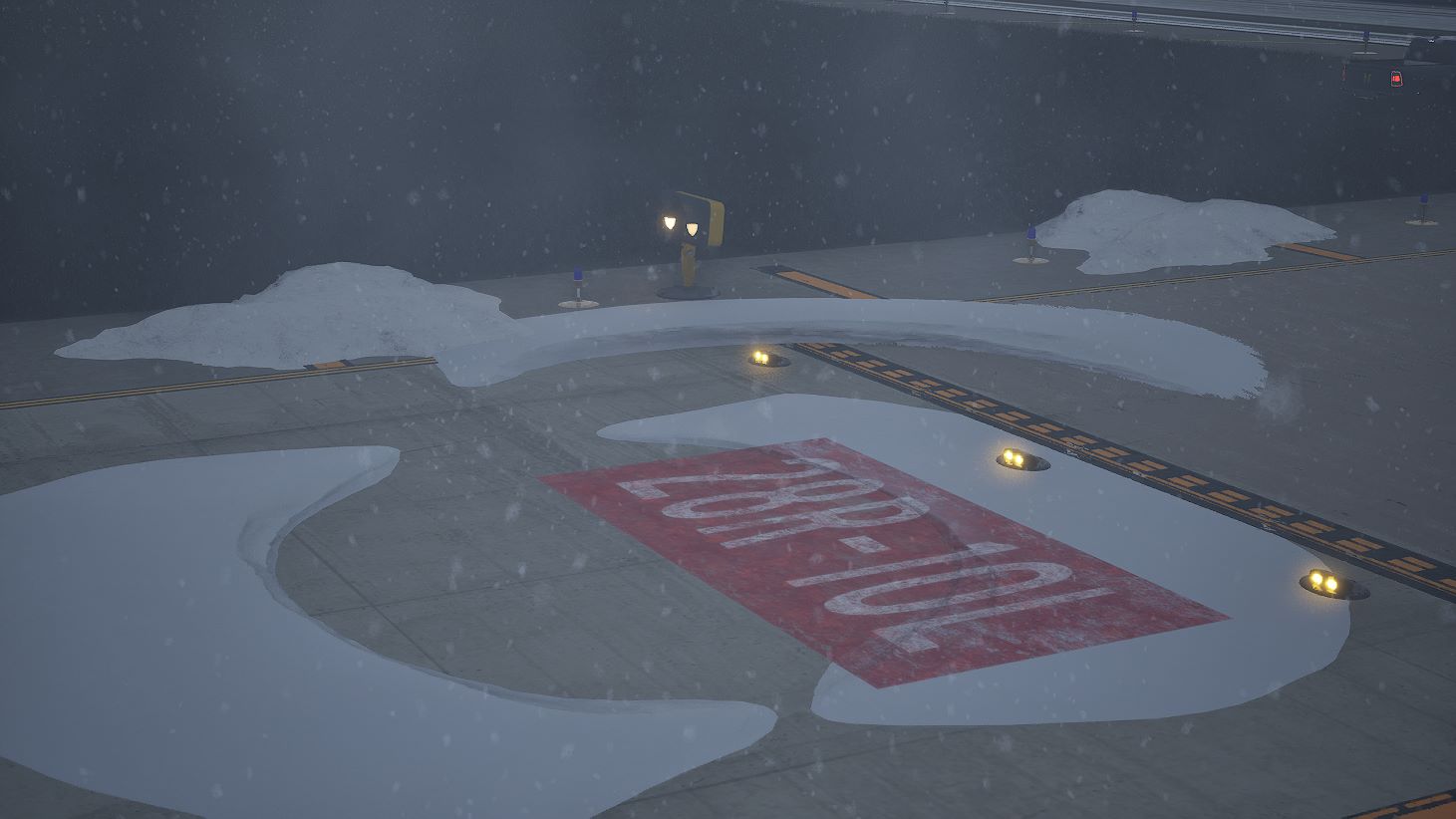
Snow & Ice
Accumulating snow on taxiways, reduced marking visibility, and blowing ground drift.
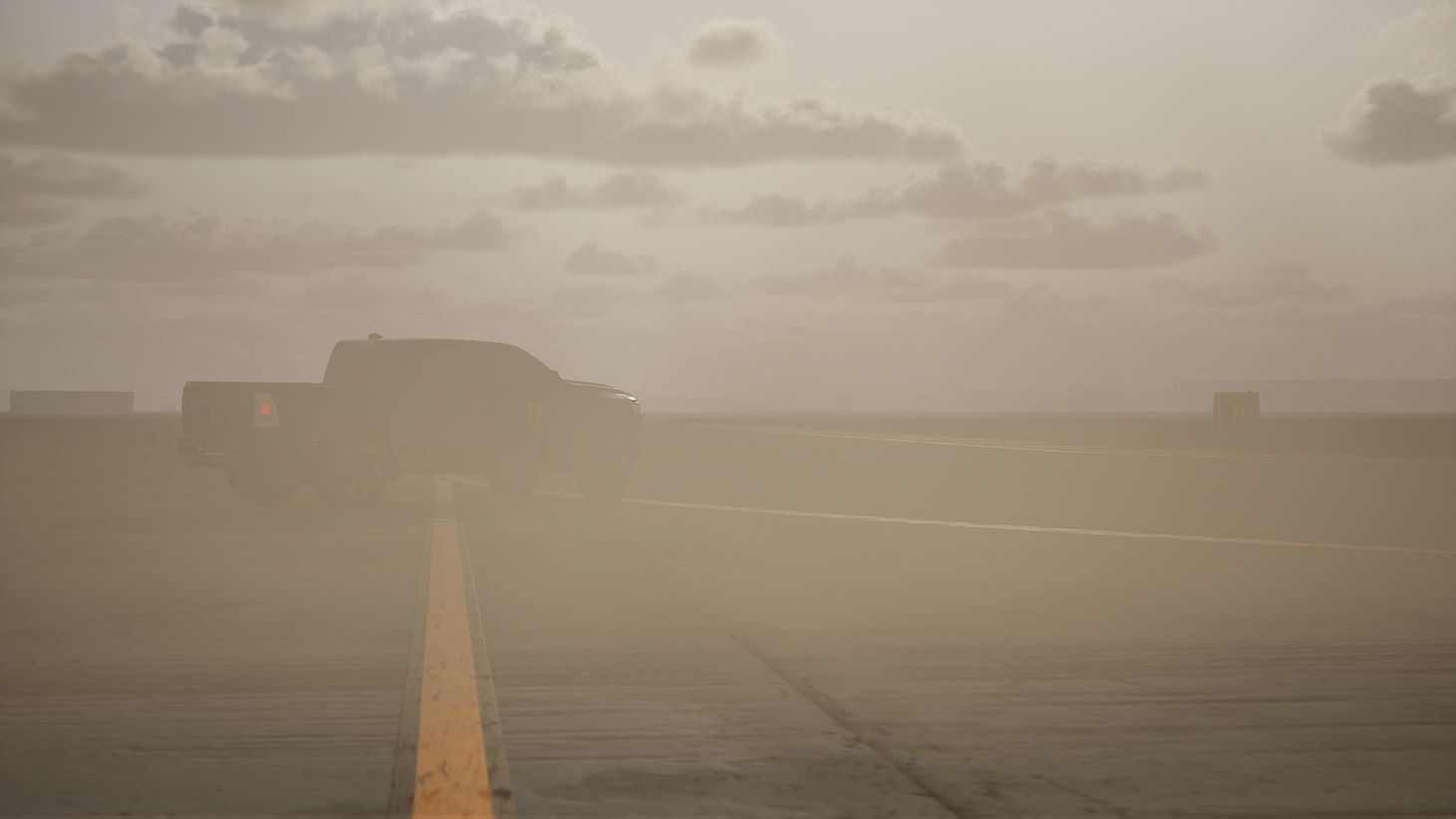
Dense Fog / Low RVR
Volumetric fog calibrated from 1,200 RVR to full CAT III conditions.
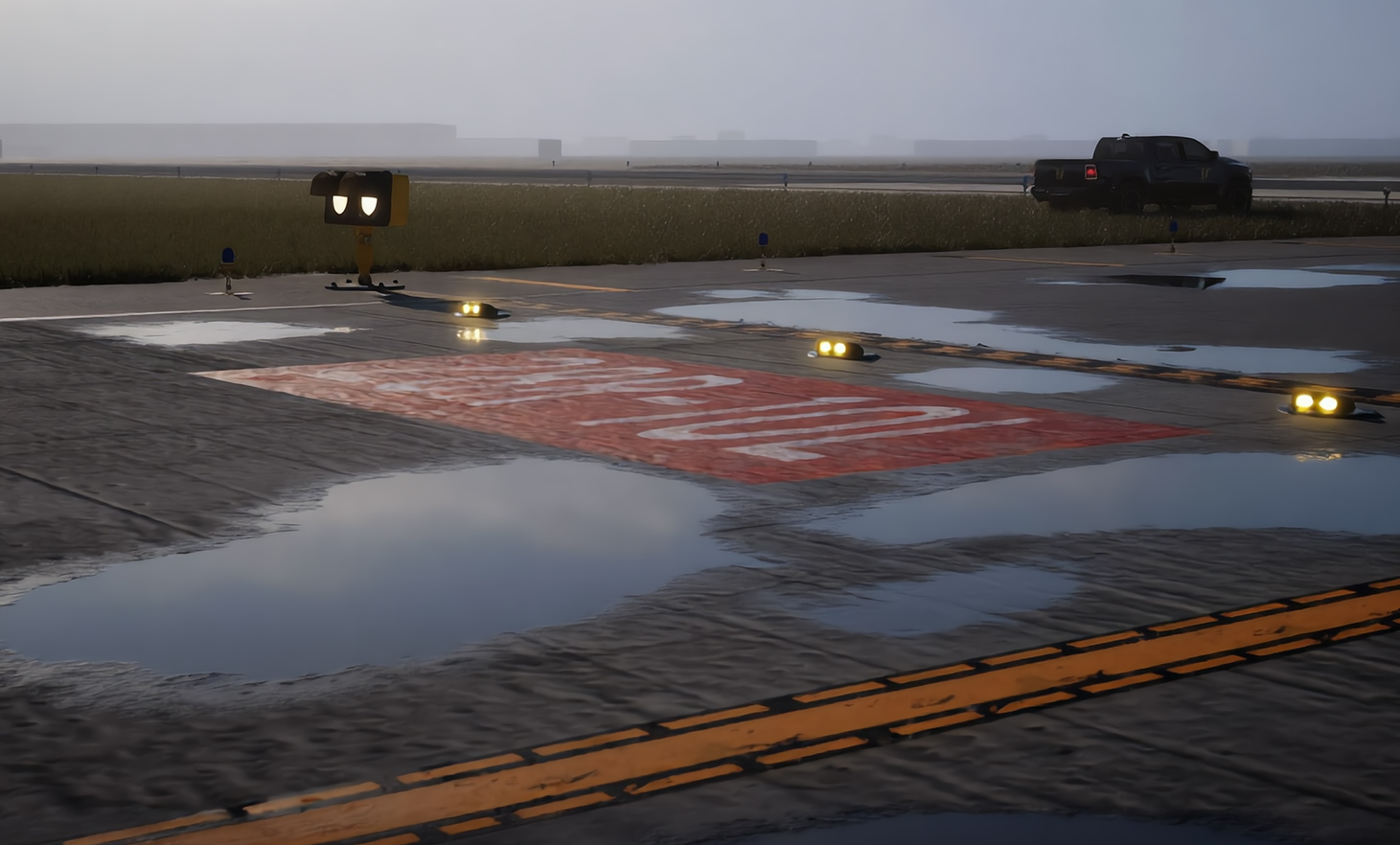
Wet Runway Operations
Wet pavement reflections, reduced friction markings, and thunderstorm visibility scenarios.
Incursion & Safety Simulations
Scenarios that would be exceptionally costly – or impossible – to produce any other way.
A fully built digital twin enables many different incursion or airfield safety scenarios to be staged, filmed from any angle, and replayed from multiple perspectives. Scenarios that would require runway closures, airline coordination, and significant safety risks can be produced in the engine with complete fidelity – and re-run instantly with any variable changed.
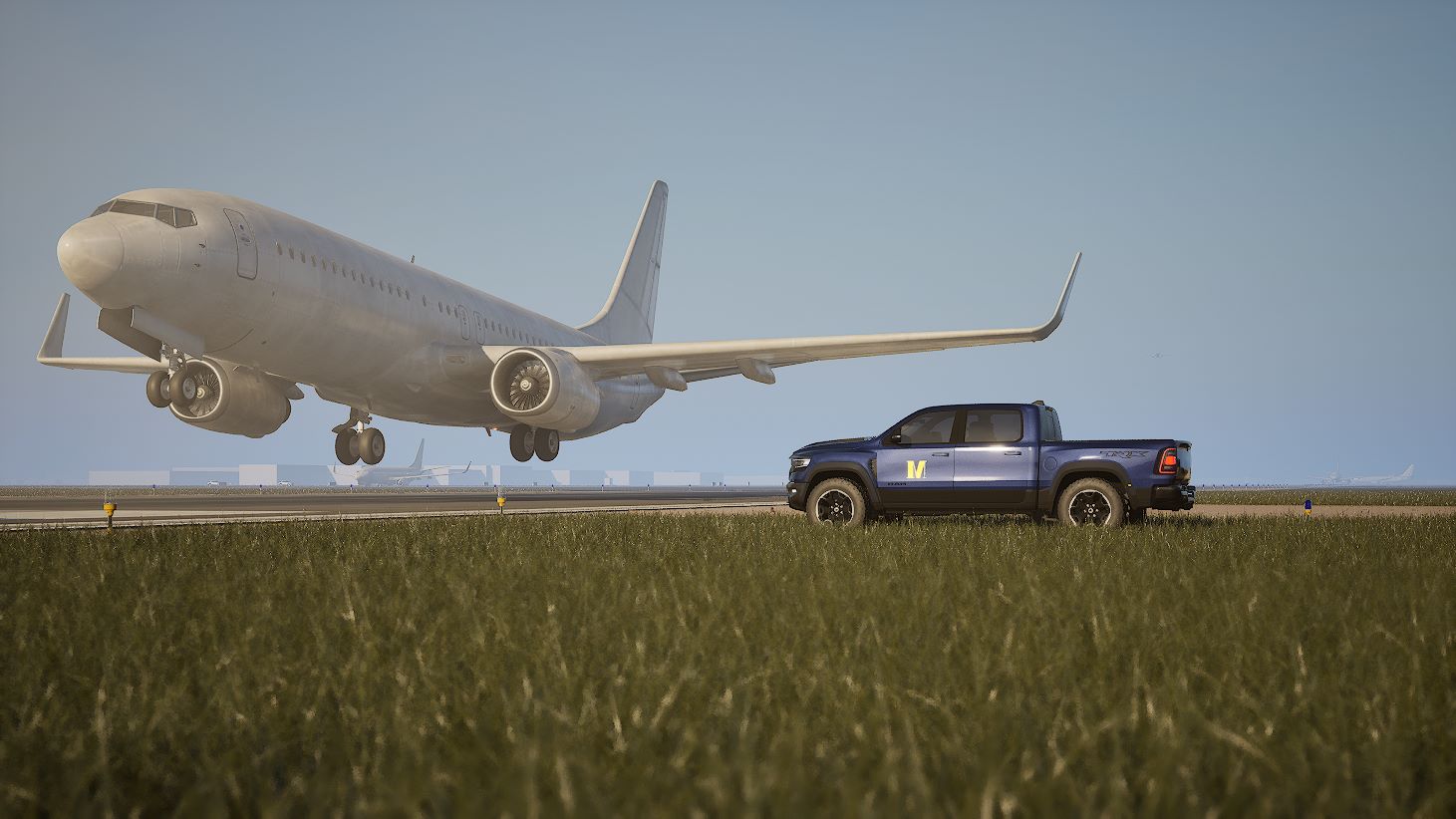
Vehicle vs. Arriving Aircraft
A ground vehicle and arriving aircraft on intersecting paths – the scenario no one wants to film for real.
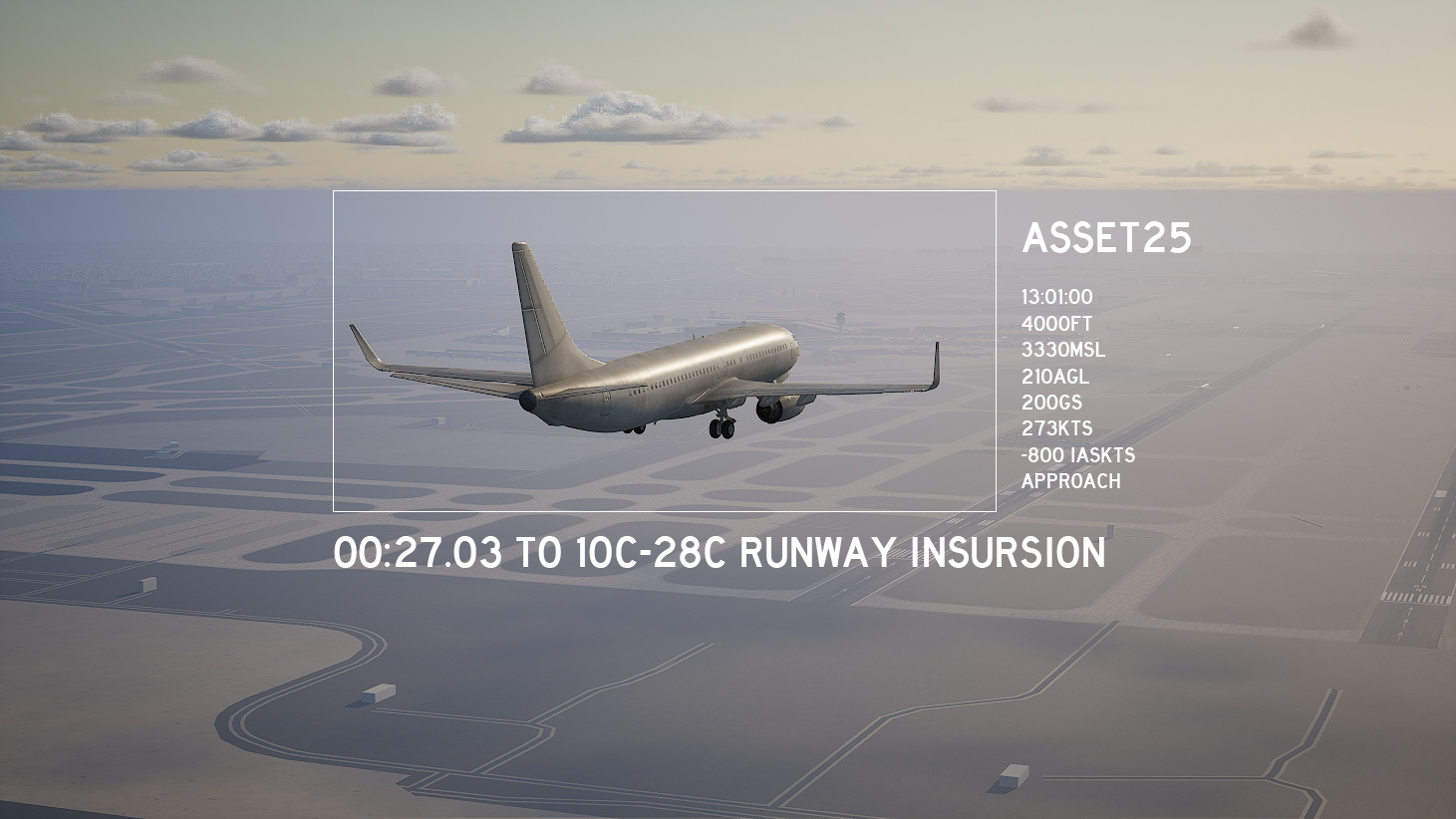
Telemetry & Position Data
Speed, heading, and position overlays – adding training context directly in the animation frame.
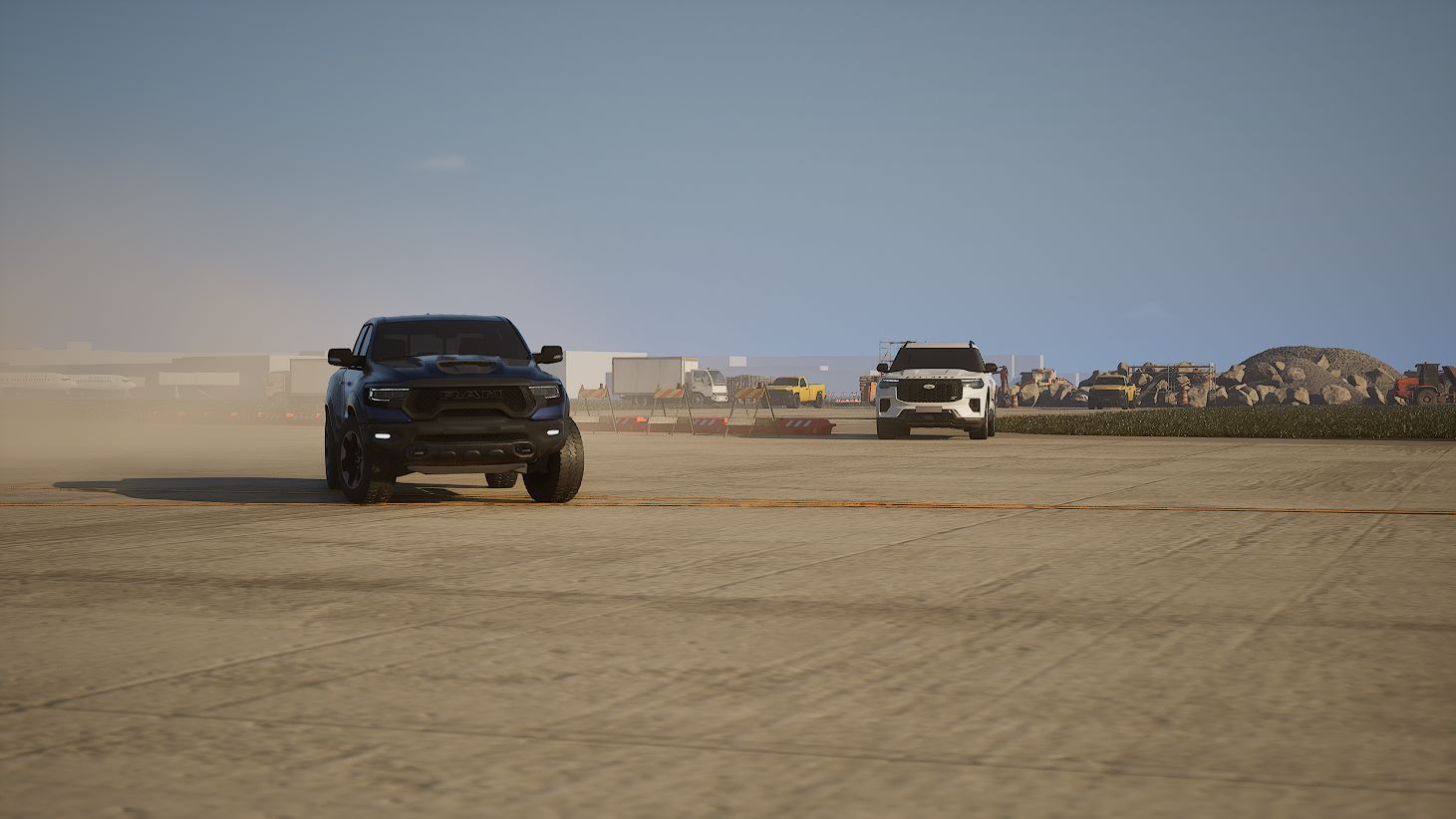
Multi-Vehicle Operations
Multiple ground vehicles and aircraft operating simultaneously – full traffic scenario simulation.
A digital twin with unlimited future scenarios.
The core deliverable is the digital twin itself – an evolving, photorealistic 3D environment of your airport, archived as a reusable asset. Every future animation, scenario, or training video draws from the same source environment.
WHAT THIS INCLUDES
FIRST PRODUCED ANIMATION
How we build, from brief to first simulation.
STEP 1
Airfield Survey & Reference
FAA charts, satellite reference, and on-site documentation of airfield geometry, markings, signage, and operations.
STEP 2
Digital Twin Build
The airfield is modeled in-engine: runways, taxiways, signs, lighting, terminals, vehicles, and aircraft.
STEP 3
Scenario Development
Storyboard and choreograph the incursion sequence with your safety team’s input.
STEP 4
Animation & Post
Camera animation, lighting, sound design, voice-over, telemetry overlays, and subtitles.
STEP 5
Delivery & Archive
Deliver video files in all formats. Source digital twin archived for all future animations.